Quantum shuffle
Every ordering is drawn from vacuum fluctuations — physically unpredictable, not merely hard to guess.
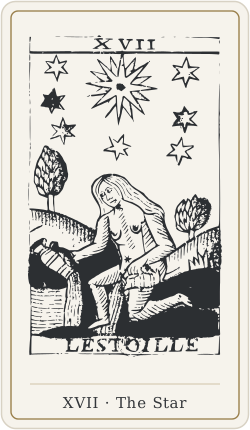
A three-card reading from a deck cut in 1650, shuffled by the flicker of empty space. Ask once, and mean it.
The ritual
The whole reading takes under two minutes and asks nothing of you but attention. Your first three-card line each week is free.
Fifteen seconds of stillness. No typing, no forms — just you and the thing you actually came to ask.
Seventy-eight cards are reordered using live quantum noise measured in Canberra. No seed exists to reproduce it.
The whole deck fans out face down. Your hand chooses past, present and what comes next.
What makes it different
No streaks, no notifications, no daily card nagging you at 9am. Three, five or twelve cards — and the three-card line is free once a week.
Every ordering is drawn from vacuum fluctuations — physically unpredictable, not merely hard to guess.
The Jean Noblet tarot, the oldest surviving Marseille pattern, traced to vector from the BnF scans.
The three-card line, the five-card cross, or the twelve houses of the horoscope wheel — one card per house.
A quantum bit decides each card's orientation, so the shadow reading is as live as the bright one.
Every reading carries a seal of the raw values that shuffled it — a fingerprint of the instant you asked, never repeated.
Glass, candlelight and slow motion. The interface gets out of the way of the moment it is holding.
The quantum algorithm
A vacuum is never truly empty. Its electromagnetic field flickers around zero constantly, and those flickers are genuinely unpredictable — not unpredictable because the maths is hard, but because nothing about the universe decides their value until the moment they are measured.
The Australian National University measures exactly that, continuously, and publishes the numbers. Arcanio asks for a fresh handful at the moment your fifteen seconds end, and walks the deck backwards with them — a Fisher–Yates shuffle where every swap index is a quantum measurement.
Whether the cards mean anything is between you and the cards. The shuffle, at least, is beyond anyone’s reach — including ours.
The deck
Traced from the Jean Noblet tarot held by the Bibliothèque nationale de France — the oldest Marseille deck that still survives.
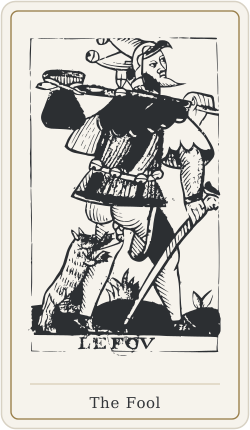
The Fool
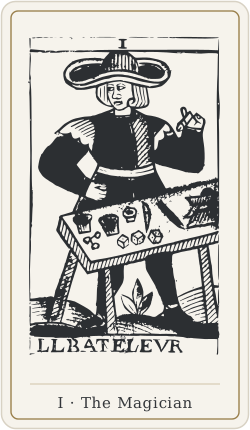
The Magician
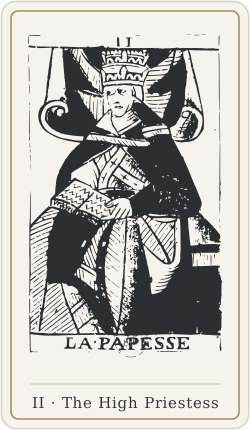
The High Priestess
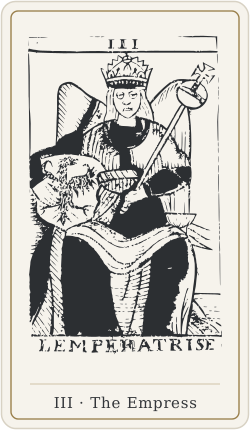
The Empress
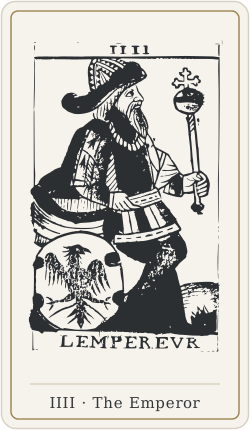
The Emperor
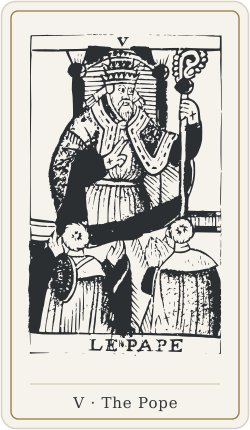
The Pope
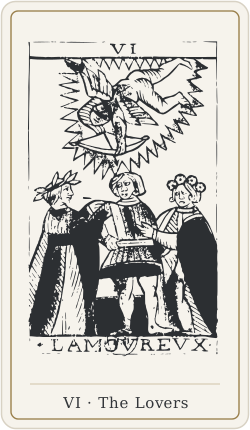
The Lovers
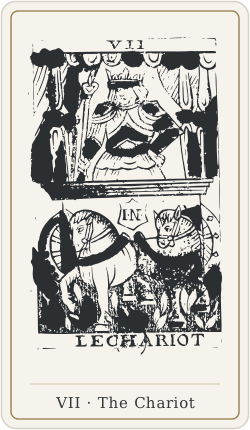
The Chariot
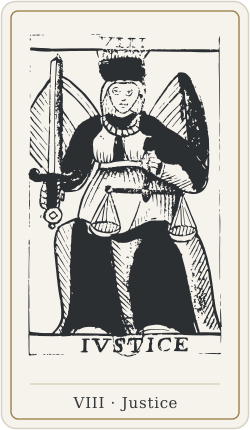
Justice
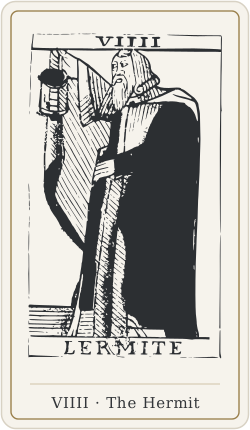
The Hermit
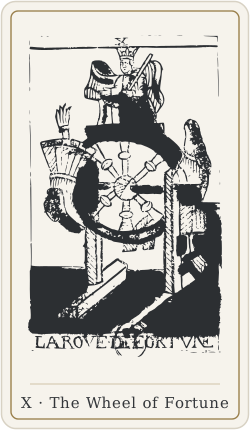
The Wheel of Fortune
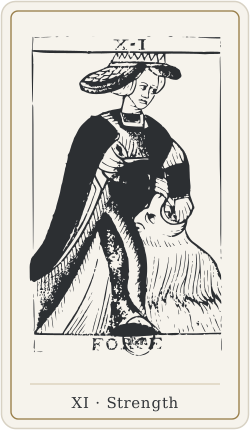
Strength
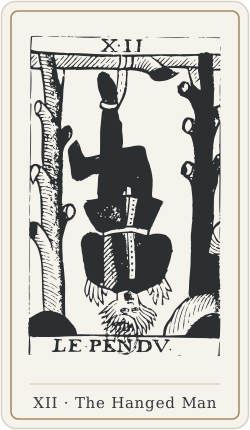
The Hanged Man
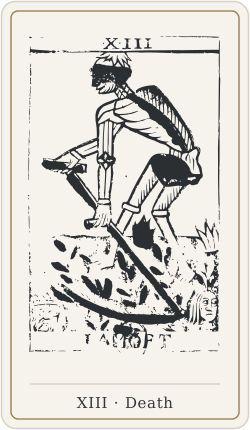
Death
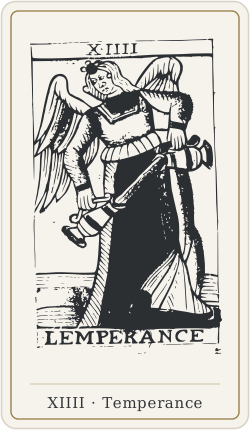
Temperance
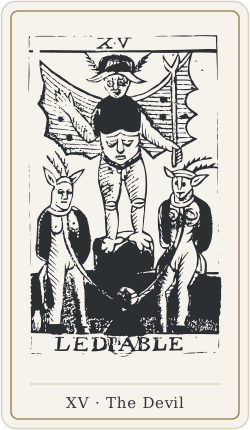
The Devil
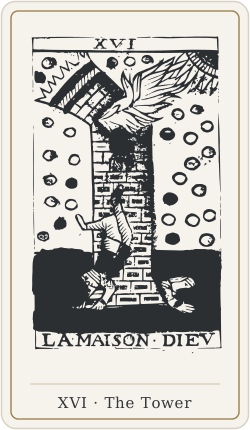
The Tower
The Star
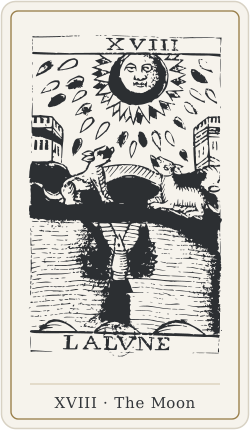
The Moon
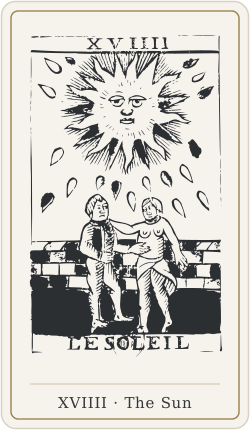
The Sun
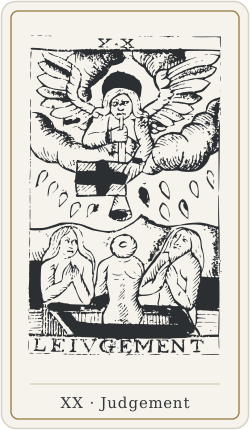
Judgement
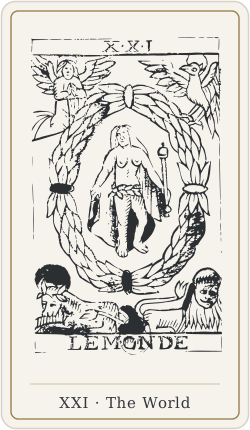
The World
One question. Fifteen seconds. Three cards.
Artwork: woodcut-tarot, CC0. Entropy: ANU Quantum Random Number Generator. For reflection, not advice.